Kajihara Tea Garden
SHOW COLLECTION DESCRIPTION
(コレクションの説明を表示する)
Introduction
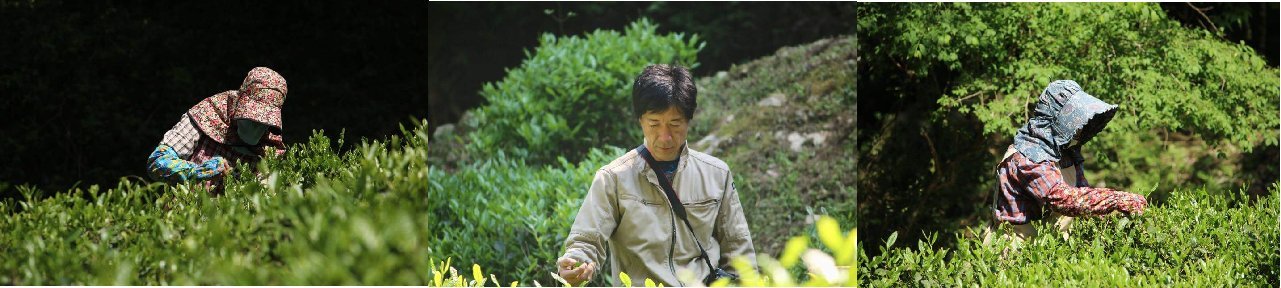
The Kajihara Tea Garden is cultivated by Toshihiro Kajihara, a 3rd generation tea farmer based in the 9-family hamlet of Tsuge in Ashikita Village, Kumamoto. Being first born in his family, he was expected to continue the family business and so specialized in tea during his studies in the Public Agricultural University in Kumamoto prefecture. At the age of 20, he returned home to start his tea career.

Inheriting the tea garden from his father and grandfather, Kajihara-san struggled for years to create a sustainable tea business as prices for tea fell and consumers switched to bottled tea. In order to make ends meet and keep the tea garden flourishing, Kajihara-san took a job as a factory operator for the local Agriculture coop. He also worked as heavy machinery operator building forest access roads and took on more financially stable crops such as rice, onions, and shiitake mushrooms. Despite many setbacks and hurdles, Kajihara-san persevered on the path of tea that his ancestors had walked before him. During this time, he refined his cultivation and processing techniques. Today in his late 50s, he is an award-winning producer of kamairicha green tea, black tea, and oolong tea. He takes particular pride in his traditional kamairicha folk tea. Even during a time when tea farmers, wholesalers and businesses are moving more towards steamed tea, his farm sticks to the rare and more labor intensive kamairicha manufacturing methods.
Through tea, Kajihara-san hopes to make people smile and believes it are the connections with people that matter and that make the world turn. In July 2020, their tea farms received damage due to the heavy flooding in Kyushu. Throughout this time, their tea farms received support and encouragement from all over Japan and Kajihara-san has been able to restore the damage. Kajihara-san feels there are still many hurdles ahead but he is always encouraged by the compliments and cheers from customers and the smiles that come with the “Oishi! (delicious, in Japanese)” after a cup of tea. With these motivations he continues forward on the tea path, one day at a time

Tsuge village, Ashikita town, Kumamoto
Kajihara-san lives in a rural mountain village called Tsuge in Ashikita town, Kumamoto prefecture (located in the Southwest coast of Kyushu island) where there are only 9 family hamlets. Their tea farms are dispersed in their village as well as in the mountains. While their tea fields are extensive, they are spread across the mountainous slopes so one cannot use the large motor-propelled tea manufacturing machines common in lowland fields. Kajihara-san’s family uses a mid-sized tea harvesting machine carried and operated by 3 people. In comparison to large scale tea farms, it may be less efficient and it can actually be quite dangerous as the tea bushes are grown on a slope. Even under these challenging conditions, Kajihara-san feels at home in their beautiful location where there is thick fog and large temperature differences between day and night (i.e., ideal conditions for growing tea). The fresh air and clean water are full of life giving energy. Kajihara-san especially enjoys being able to fully feel and sense the differences and transitions across the four seasons in the mountains.
In recent years tea enthusiasts from all over Japan and even abroad have come to visit Kajihara tea gardens. Guests are always impressed by the home made tea made in the rural mountains of Kumamoto. During a visit, one can enjoy tea time at Kajihara-san’s place, with their original kamairicha and Japanese black tea, brewed by the owners themselves!


Kajihara-san's Green Friendly Teas: Eco-Friendly Points
- Reduced Fuel Use: Kamairichas require less fuel use in comparison to the most common type of green tea that is produced in Japan, sencha. While sencha is made by steaming fresh leaves with steam, kamairicha is made by directly roasting the picked fresh leaves in an iron kettle over an open flame. Note that Kajihara-san is not making a statement though to say that senchas are not environmentally friendly.
- Minimal Use of Fertilizer: In comparison to other perennial crops, tea requires more fertilizer, because multiple harvests of young leaves takes away a lot of the nutrients and energy that the bush takes from the ground and the sun. In recent years, the burden this places on the environment has become an issue and fertilizer recommendations have been re-evaluated, leading to decreased use of fertilizer throughout prefectures. Kajihara-san’s farm makes a conscious effort to use less than half of the recommended amount, which they feel is still excessive. They are hoping to further decrease the use of fertilizer as they build a healthy soil using organic and local nutrient sources.
- No Pesticides since 2000: At Kajihara Tea Gardens, pesticides and fungicides have not been used since the year 2000. Previously, they only utilized 2 or 3 times a year. However, the applications were tedious and Kajihara-san also felt it was not good for humans or for the tea. There were a few years, after completely stopping chemical use, when their tea bushes suffered disease and pest outbreaks, but they have not had recent problems. This makes them think the tea farm ecology has readjusted and found a strong and stable place.
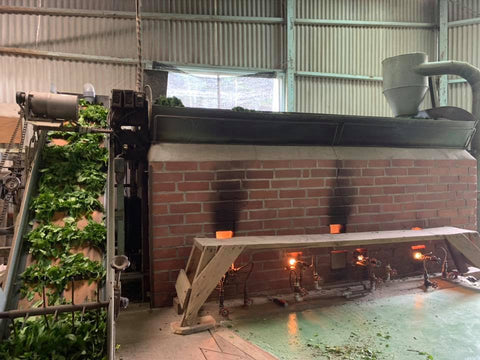
- Antique Machinery and Use of Five Senses: Kajihara-san’s tea farm has been around for approximately 60 years. Their factory was rebuilt about 30 years ago and is still functioning well today. Kajihara-san feels it is unnecessary to purchase new technology even if these machines are efficient and difficult to adjust (i.e., in comparison to the new models). Their farm sticks to the philosophy of fixing machinery by themselves and if a technician cannot repair it, they will look for used machinery. The most antique machinery Kajihara-san owns is their round pot (丸釜), which was made early in during the Showa period (~1926). While modern equipment includes sophisticated sensors to monitor environmental conditions and adjust its functioning, their antique machines have no sophisticated sensors and require careful manual adjustment with the changing temperature, humidity, and the condition of the tea leaves. Their tea is therefore dependent upon the five human senses of humans, experience and intuition.

Kajihara Tea Garden
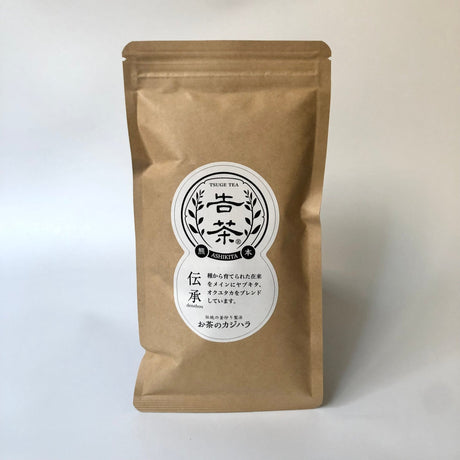
#0351 Kajihara Tea Garden #02: Densho, Kamairicha Green Tea from Kumamoto 伝承 釜炒り茶
Very low stock (4 units)Regular priceFrom JPY ¥385Unit price-
Kajihara Tea Garden
#0350 Kajihara Tea Garden: #01 Densho Premium, Kamairicha Green Tea from Kumamoto 伝承プレミアム 釜炒り茶
In stock (9 units)Regular priceFrom JPY ¥454Unit price-
 OUT OF STOCK with no current procurement plans. If you would like to purchase, please contact us at help@yunomi.life for custom procurement or production.
Kajihara Tea Garden
#0352.K5 Kajihara Tea Garden: #03 Rare Izumi First Flush Black tea (Wakocha) 春摘みいずみ和紅茶
Regular priceFrom JPY ¥825Unit priceKajihara Tea Garden
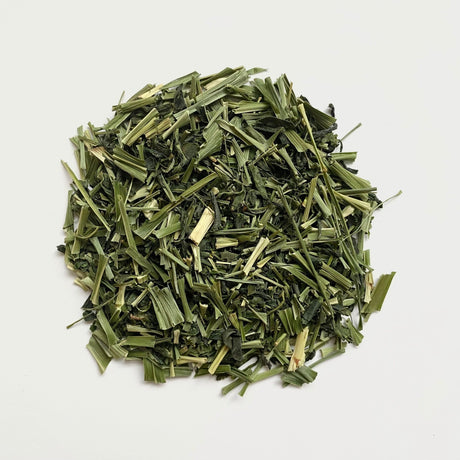
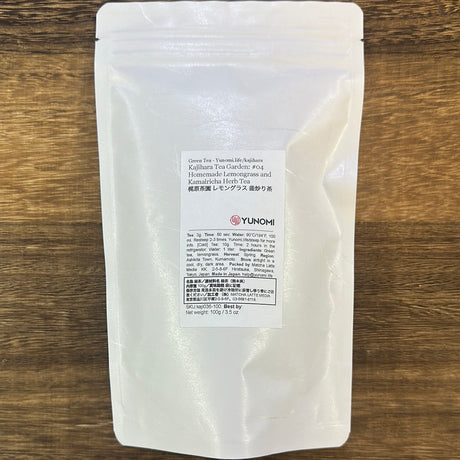
#0353 Kajihara Tea Garden: Homemade Lemongrass and Kamairicha Herb Tea
Very low stock (4 units)Regular priceFrom JPY ¥450Unit price-
Kajihara Tea Garden
#0356.K5 Kajihara Tea Garden: #08 Koushun Autumn Flush Black Tea (Wakocha) 秋摘み香駿和紅茶
In stock (14 units)Regular priceFrom JPY ¥800Unit price-
Kajihara Tea Garden
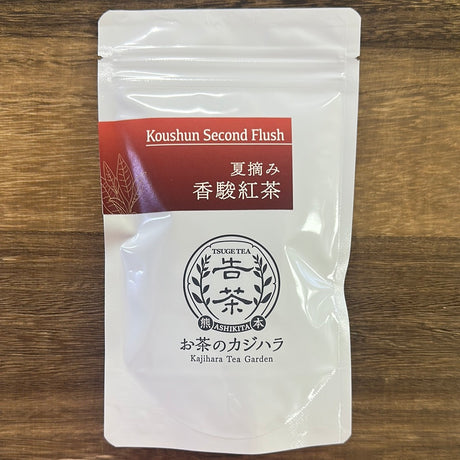
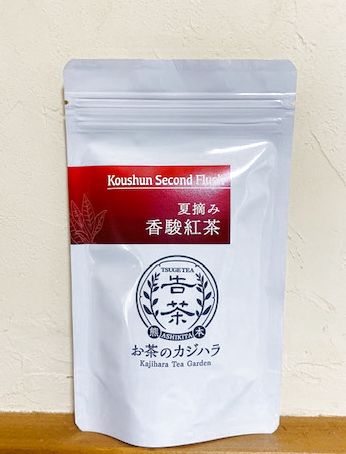
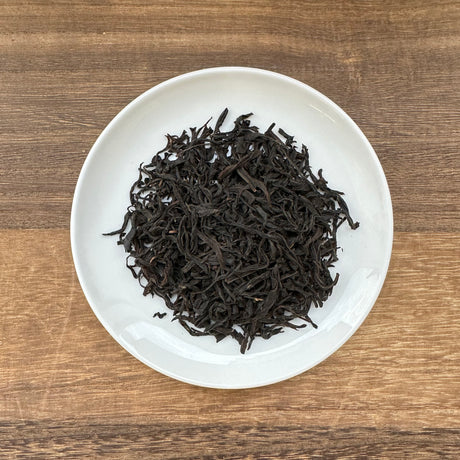
#0355 Kajihara Tea Garden: #07 Koushun Second Flush Summer Black Tea (Wakocha) 夏摘み香駿和紅茶
In stock (9 units)Regular priceFrom JPY ¥800Unit price-
Kajihara Tea Garden
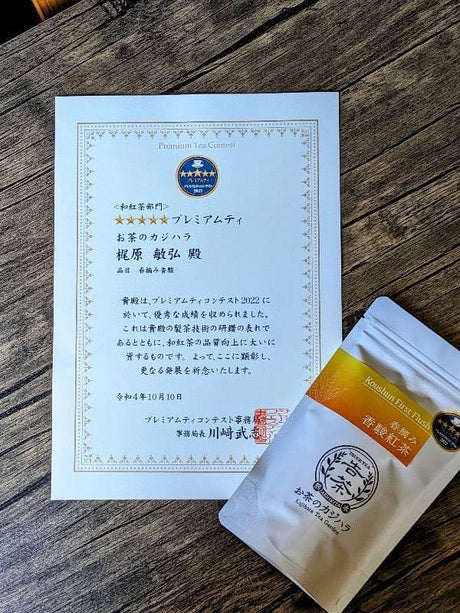
#0354.K5 Kajihara Tea Garden: Award Winning Koushun First Flush Black Tea (Wakocha) 春摘み香駿和紅茶
In stock (9 units)Regular priceFrom JPY ¥980Unit price-
- OUT OF STOCK with no current procurement plans. If you would like to purchase, please contact us at help@yunomi.life for custom procurement or production.
Kajihara Tea Garden
#0837.K5 Kajihara Tea Garden: Single Estate Kinmokusei Scented Black Tea (Wakocha) 金木犀和紅茶
Regular price JPY ¥1,800Unit price -
- OUT OF STOCK with no current procurement plans. If you would like to purchase, please contact us at help@yunomi.life for custom procurement or production.
Kajihara Tea Garden
#0903.K5 Kajihara Tea Garden Hatsutsumi (Hachijyuhachiya) Koushun , Green Tea from Kumamoto 八十八夜摘み香駿
Regular priceFrom JPY ¥640Unit price -