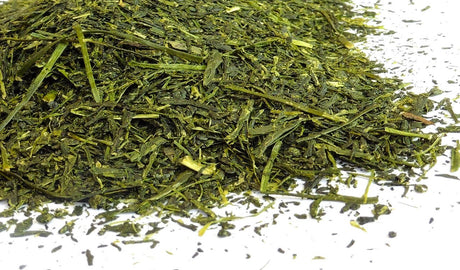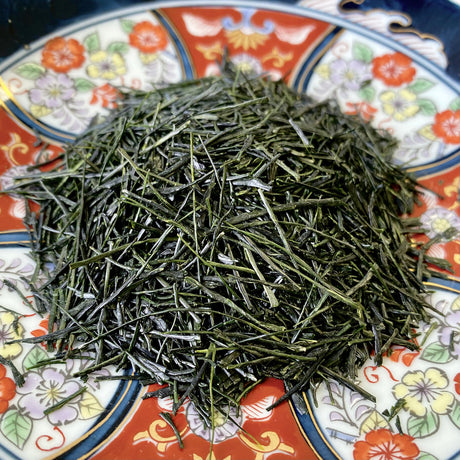

When exploring tea from Gifu Prefecture, the two main names that come up are Shirakawa cha and Ibi cha.
Kasuga tea, while less widely known, is a distinctive tea produced within the Ibi region, particularly notable for its use of native tea varieties and traditional cultivation methods.
In simple terms:
- Shirakawa cha: refined and aromatic tea from cool mountain valleys
- Ibi cha: a broad regional tea known for balance and everyday drinkability
- Kasuga cha: a unique, small-scale tea within Ibi, often made from native varieties with strong character
In this article, we explore what makes Kasuga tea special, based on a visit to the region.
Kasuga Tea in Gifu – A Mountain Tea Tradition Rooted in Nature
Located at the western edge of Gifu Prefecture, at the foot of Mt. Ibuki, the Kasuga region is a unique tea-producing area shaped by misty mountains and a cool climate.
During this trip to Gifu, we visited several tea regions—Shirakawa, Ibi, and Kasuga—each with its own distinct character.
On the second day, our final stop was Denroku Tea Garden, nestled deep in the mountains of Kasuga.


Tea Fields Known as the “Machu Picchu of Gifu”

Steep tea terraces in Kasuga, often called the “Machu Picchu of Gifu.“
The tea fields of Kasuga are often referred to as the “Machu Picchu of Gifu” due to their steep, mountainous terrain.
The road leading there is narrow, winding, and steep—challenging to navigate without experience.
From the tea fields, we continued on foot toward the summit, where a breathtaking view awaited us: tea terraces stretching across the slopes, reminiscent of the famous Peruvian site.
We were guided by Satomi, the sister of Denroku Tea Garden’s owner, Hiromi Mori, who kindly welcomed us and showed us around.


Ancient Mountain Tea” – A 700-Year Tradition

Tea cultivated in this region is sometimes described as “Tenku no Koraicha (ancient mountain tea).”
In Kasuga, tea cultivation has been passed down for over 700 years—not merely as an industry, but as part of everyday life.
Even today, rare zairai tea plants (grown from seed rather than cloned cultivars) continue to thrive here.
These native tea plants, often referred to as “Koraicha (ancient tea),” retain a natural diversity that is increasingly rare in Japan.
Steep Slopes That Protected Zairai Tea
 The tea fields of Denroku Tea Garden lie on extremely steep slopes.
Because machinery cannot be used in such terrain, large-scale replanting with modern cultivars never took place—allowing the original zairai plants to survive.
While zairai tea may be less uniform and lower yielding than modern cultivars, it offers a depth of flavor that reflects the land itself.
These plants can also be maintained for many years without replanting, making them well suited to this environment.
Climate and Environment That Shape the Flavor of Kasuga Tea

Kasuga tea is shaped by a cool mountain climate, large temperature differences between day and night, and frequent morning mist—conditions that are well known for producing high-quality tea.
These environmental factors give Kasuga tea its characteristic aromatic depth and gentle, rounded flavor.
In addition, many tea fields in this region are cultivated without the use of pesticides, reflecting a close relationship with the natural environment and traditional farming practices.
Ibi Tea and Kasuga Tea

Tea produced in Gifu is collectively known as Mino-cha, with Mino-Ibi cha and Mino-Shirakawa cha being the most well-known categories.
Kasuga cha is generally considered part of Mino-Ibi cha and is often distributed as “Ibi Kasuga cha.”
However, Kasuga’s steep terrain and harsher climate set it apart from other Ibi tea areas.
These conditions have helped preserve both zairai tea plants and low-intervention cultivation practices.
At Denroku Tea Garden, both zairai and the widely grown Yabukita cultivar are cultivated, balancing individuality and consistency in their teas.
Challenges and New Directions

Like many rural regions in Japan, Kasuga faces the challenge of an aging population.
From the mountaintop, we could see abandoned tea fields scattered among those still being maintained.
About seventeen years ago, Denroku Tea Garden shifted from supplying harvested leaves to local cooperatives to selling directly to customers through markets and events.
This shift has gradually brought more attention to their rare zairai teas.
Even today, the garden remains family-run, producing only small quantities—most of which are consumed locally.
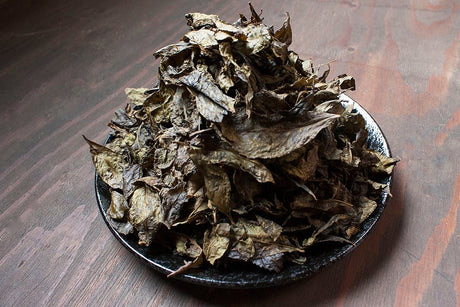
We were fortunate to receive a portion of this tea, now introduced as “霧の古来茶 - Ancient Mist Tea.”
It offers a gentle sweetness, soft aroma, and a nostalgic character that quietly reflects the landscape and long-standing tea culture of this mountain region.
A Future Sustained by Visitors

In recent years, Kasuga has gained attention as a scenic destination, with social media bringing increased visibility.
At times, up to 400 visitors per month come to see the tea fields.

Denroku Tea Garden also offers tea-picking experiences during the spring harvest season, allowing visitors to connect directly with tea cultivation.

Our team with Satomi Mori from Denroku Tea Garden.
Looking Toward the Future
The tea fields of Kasuga are more than just a beautiful landscape.
They represent a way of life that has been preserved over generations, alongside the challenges of sustaining it into the future.
We hope that the culture of zairai tea, nurtured in this region for centuries, will continue to be passed on through growing awareness and appreciation.
 On the way to the tea fields, we came across sazare-ishi—small stones that gradually fuse into larger rocks over time, and the sacred stone mentioned in Japan's national anthem, Kimigayo. Kasuga is known as one of the origin sites of this stone.
This tea, now introduced as Ancient Mist Tea, offers a rare opportunity to experience the character of Kasuga’s mountain-grown zairai tea.
Learn more about this tea here:
→ Ancient Mist Tea